
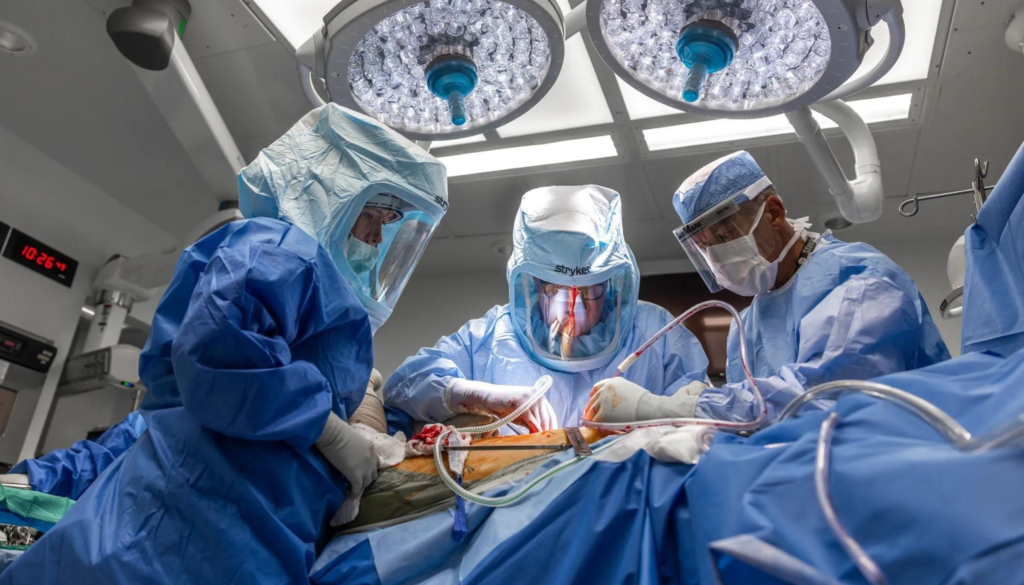
Advanced Hip Replacement Surgery for Pain Relief and Improved Mobility
Hip pain can significantly affect your ability to walk, sit, stand and perform everyday activities. Conditions such as hip arthritis, joint damage and fractures can cause persistent pain, stiffness and reduced mobility.
When medications, physiotherapy and other non-surgical treatments no longer provide sufficient relief, Hip Replacement Surgery may be recommended.
Dr. Harjoban Singh provides specialised orthopaedic evaluation and treatment for patients with hip joint conditions, focusing on personalised care, improved joint function and long-term mobility.
What Is Hip Replacement Surgery?
Hip Replacement Surgery, also known as Hip Arthroplasty, is a surgical procedure in which damaged portions of the hip joint are replaced with artificial components called prostheses.
The hip is a ball-and-socket joint that connects the thigh bone (femur) to the pelvis. During surgery, damaged cartilage and bone are removed and replaced with artificial components designed to restore joint movement and reduce pain.
Hip replacement surgery is commonly recommended for patients with severe hip arthritis, joint damage or other conditions affecting normal hip function.
When Do You Need Hip Replacement Surgery?
Hip replacement may be considered when hip pain and joint damage significantly interfere with everyday activities.
Common symptoms include:
Persistent pain in the hip or groin area.
Pain while walking, standing or climbing stairs.
Stiffness and restricted hip movement.
Difficulty sitting down or getting up from a chair.
Pain that interferes with sleep or rest.
Difficulty putting on shoes and socks.
Reduced ability to perform daily activities.
Limited improvement with medications and physiotherapy.
Conditions Treated with Hip Replacement Surgery
1. Osteoarthritis of the Hip
A degenerative condition in which the protective cartilage of the hip joint gradually wears away, resulting in pain, stiffness and reduced mobility.
2. Avascular Necrosis (AVN)
A condition in which reduced blood supply causes bone tissue in the femoral head to die, potentially leading to collapse of the hip joint.
3. Rheumatoid Arthritis
An inflammatory joint disease that can damage hip cartilage and surrounding structures, resulting in pain and restricted movement.
4. Post-Traumatic Arthritis
Arthritis that develops following a hip injury, fracture or previous joint damage.
5. Hip Fractures
Certain severe hip fractures, particularly in older adults, may require hip replacement depending on the fracture pattern and overall condition of the patient.
Types of Hip Replacement Surgery
1. Total Hip Replacement (THR)
Total Hip Replacement involves replacing both the damaged ball (femoral head) and the socket (acetabulum) of the hip joint with artificial components.
It is commonly recommended for patients with advanced hip arthritis and significant joint damage.
2. Partial Hip Replacement (Hemiarthroplasty)
In Partial Hip Replacement, the damaged femoral head is replaced while the natural hip socket is preserved.
It is commonly considered for selected patients with certain types of hip fractures.
3. Revision Hip Replacement
Revision Hip Replacement is a procedure performed to replace or repair a previously implanted hip prosthesis due to complications such as implant loosening, wear, infection or instability.
Benefits of Hip Replacement Surgery
Hip replacement surgery can provide several potential benefits:
Significant reduction in hip pain.
Improved walking ability and mobility.
Better joint movement and flexibility.
Improved ability to perform daily activities.
Enhanced quality of life.
Improved independence in routine activities.
Individual outcomes depend on the patient’s health, joint condition, surgical factors and rehabilitation.
Our Approach to Hip Replacement Surgery
Dr. Harjoban Singh believes in an individualised approach to hip replacement treatment, with careful evaluation and appropriate surgical planning.
1. Comprehensive Consultation
Detailed assessment of hip pain, symptoms, medical history and daily activity limitations.
2. Diagnostic Evaluation
Clinical examination and appropriate imaging, including X-rays, to understand the extent of hip joint damage.
3. Personalised Treatment Planning
Selection of the most suitable treatment option and implant based on the patient’s age, bone quality, lifestyle and joint condition.
4. Surgical Procedure
Carefully planned hip replacement surgery with attention to joint stability, alignment and function.
5. Post-Surgical Rehabilitation
A structured recovery programme involving mobilisation, physiotherapy and regular follow-up to support functional improvement.
Recovery After Hip Replacement Surgery
Recovery following hip replacement surgery varies depending on the patient’s overall health, surgical procedure and rehabilitation progress.
Many patients begin standing and walking with assistance within a day after surgery, when medically appropriate.
The recovery process generally involves:
Early mobilisation with appropriate support.
Physiotherapy and guided walking exercises.
Gradual improvement in hip strength and movement.
Following recommended hip precautions, where applicable.
Gradual return to routine daily activities.
Regular follow-up appointments.
Following the surgeon’s instructions and maintaining a consistent rehabilitation routine are important for recovery.
Why Choose Dr. Harjoban Singh?
Dr. Harjoban Singh is an experienced Orthopaedic Surgeon specialising in Joint Replacement, Arthroscopy and Sports Injury Management.
His professional experience includes working at reputed orthopaedic centres across India and completing specialised fellowships in Shoulder and Knee Surgery in the United Kingdom.
His treatment approach focuses on:
Specialised Joint Replacement Experience.
Individualised Surgical Planning.
Comprehensive Orthopaedic Assessment.
Patient-Centred Treatment.
Post-Surgical Recovery and Rehabilitation Guidance.